
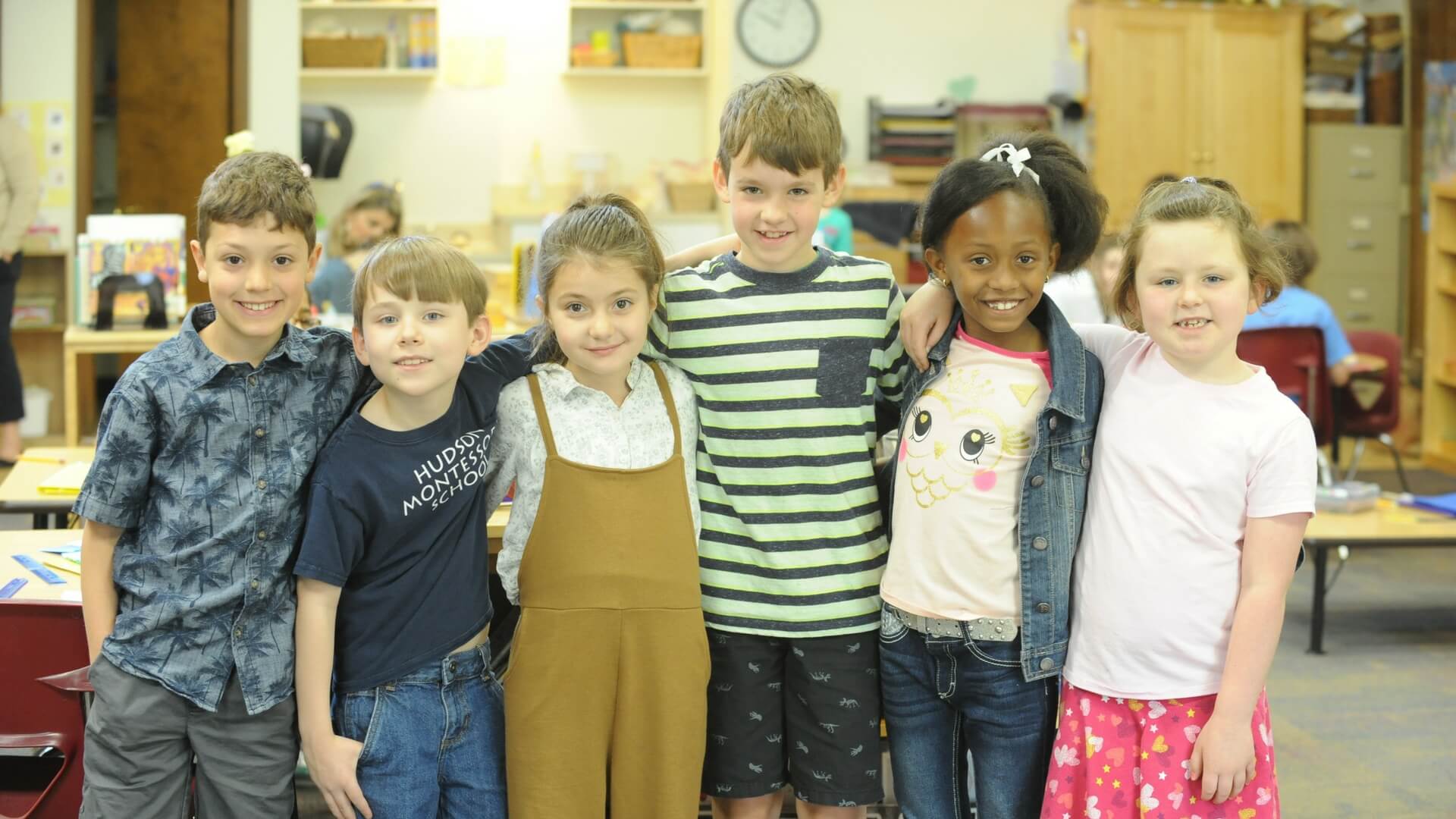

What Is Montessori Elementary Education?
Montessori elementary education is a way of learning that helps children become active learners. Instead of asking children to sit, listen, and repeat facts all day, Montessori gives them time to explore, ask questions, and learn through hands-on work.
In a Montessori classroom, children have a clear daily routine, but they also have choices. They can work on tasks that match their level and interests. Teachers guide children and give help when needed, but they do not give every answer.
This approach helps children understand that learning is something they can take part in. They learn how to start a task, work through a problem, and finish their work. Over time, these habits can help children become more independent thinkers.
How Montessori Builds Independent Thinkers
Montessori elementary education is designed to help children become confident, responsible, and independent learners. Instead of giving children every answer, Montessori gives them opportunities to make choices, explore ideas, solve problems, and learn from their own experiences.
Children are guided by teachers, but they also have space to work independently. This balance helps them develop important skills that can support them throughout school and everyday life.
Children Learn to Make Choices
Choice is an important part of Montessori elementary education. Children usually have a set of lessons and tasks to complete, but they may have some freedom in deciding what to work on and when to work on it.
This gives children regular chances to make decisions. They learn to think about what needs to be done and how they should use their time. They also begin to understand that their choices can have results.
For example, a child may choose to complete a math activity before reading. The child needs to plan the work, gather the needed materials, and stay focused until the task is finished.
As children grow, they can make more thoughtful choices. They begin to understand which tasks may take more time, when they need extra practice, and when it is appropriate to ask for help.
Children Learn Through Hands-On Work
Hands-on learning is an important part of Montessori elementary education. Children often understand ideas better when they can see, touch, and use learning materials.
A child may use special materials to explore math, language, science, geography, or other subjects. Instead of only reading about an idea, children can work with it directly and see how different parts connect.
Hands-on activities also give children opportunities to learn from their mistakes. If an activity does not work as expected, they can look at what happened and try again.
This makes learning an active process. Children are not only trying to remember an answer. They are learning how and why something works.
Children Learn to Solve Problems
Problem-solving is another important part of Montessori elementary education. Children are encouraged to think about a problem before asking an adult to solve it for them.
A teacher may ask a question or provide a small hint to help the child think about the next step. The goal is not to leave the child without support but to give them enough guidance to continue thinking independently.
Mistakes are also a normal part of this process. Children can try one solution, see what happens, and then try another approach.
With regular practice, children can become more comfortable with difficult tasks. They learn that some problems need time and careful thinking rather than an immediate answer.
The Role of the Montessori Teacher
The Montessori teacher has an important role in helping children become independent. The teacher does not simply provide information and ask children to repeat it.
Instead, the teacher observes how each child learns. They look at the child’s strengths, interests, progress, and areas where more support may be needed. Lessons and guidance can then be provided based on the child’s needs.
Teachers also maintain a calm and organized classroom. Learning materials have specific places, and children learn how to use and return them properly.
This organized environment helps children complete more tasks without constant adult assistance.
When children have questions, teachers can guide them toward possible answers. This allows children to develop their own thinking skills instead of depending on an adult for every solution.
How Montessori Elementary Education Builds Responsibility
Taking Care of Their Work
Montessori elementary education teaches children that they have responsibility for their own work. This responsibility includes more than simply completing assignments.
Children also learn to care for their classroom and learning materials. They may return materials after using them, keep their work area organized, and treat shared resources with care.
These simple habits help children understand that their actions affect their surroundings.
Children also learn the importance of finishing what they start. They may need to stay with an activity until the work is complete before moving to another task.
Managing Time
Learning to manage time is another useful skill. Children need to understand how much work they have and how they can complete it within the available time.
In a Montessori classroom, children have opportunities to practice this skill regularly. They may learn that some activities take only a short time while others require more concentration.
Over time, children can become more aware of their own work habits. They may learn when they need to slow down, when they need more practice, and when they should ask their teacher for support.
These skills can become increasingly useful as school work becomes more challenging.
How Montessori Encourages Critical Thinking
Critical thinking means taking time to understand a question, examine information, and consider different possibilities. Montessori elementary education gives children many opportunities to practice these skills.
Teachers may ask questions that encourage children to explain their ideas. Children might compare two things, identify a pattern, explain a process, or describe how they reached an answer.
For example, instead of only asking a child for the answer to a math problem, a teacher may ask the child to explain how they solved it.
This encourages children to think about the steps behind their answers. Over time, they can become more comfortable checking their work, asking questions, and considering whether their ideas make sense.
Learning With Other Children
Montessori classrooms also provide opportunities for children to learn with and from their classmates. Children may work together, share materials, discuss ideas, or help one another with activities.
Working with others helps children develop social skills. They learn to listen, take turns, communicate clearly, and respect different ideas.
Older and younger students may also benefit from working together. A child who understands a particular lesson may explain it to another student. Teaching someone else can help strengthen the child’s own understanding.
At the same time, children learn that they can consider another person’s idea without simply accepting it. They can listen, ask questions, and form their own conclusions.
How Montessori Builds Confidence
Independence and confidence often develop together. When children are given opportunities to complete tasks on their own, they can see what they are capable of doing.
A child may need help with an activity at first. After practicing, the child may eventually complete the same task independently. This progress can create a sense of achievement.
Montessori elementary education also gives children opportunities to learn from mistakes. Rather than treating every mistake as failure, children can use mistakes to understand what needs to change.
This can encourage children to keep trying when a task becomes difficult. They can learn that improvement often comes through practice, patience, and effort.
The Value of Real-World Learning
Montessori elementary education can connect classroom learning with the world around children. Lessons may include math, language, science, history, geography, nature, and culture.
Children can explore how different subjects are connected. For example, a lesson about plants may lead to questions about weather, animals, food, seasons, or the environment.
This approach can help children understand that knowledge does not exist in separate sections. What they learn in one subject can help them understand another.
Real-world learning can also encourage children to ask questions about things they see in everyday life.
Long-Term Benefits of Montessori Elementary Education
The skills children develop through Montessori elementary education can continue to help them as they move through school.
Learning to make choices, manage time, solve problems, communicate with others, and take responsibility can help children handle more complex school work.
Children also develop work habits that can support future learning. They learn that progress often requires patience and practice.
The goal is not simply to help children complete their school tasks. It is to help them become learners who can think, ask questions, explore ideas, and take responsibility for their progress.
How Parents Can Support Independent Learning at Home
Parents can support independent learning by giving children simple opportunities to make decisions and complete suitable tasks on their own.
For example, parents can allow children to choose between two appropriate activities, organize their school supplies, prepare simple items, or complete age-appropriate household tasks.
Parents can also avoid giving an answer too quickly when a child has a problem. Instead, they can ask questions such as, “What could you try next?” or “Is there another way you could solve this?”
This gives children time to think before receiving an answer.
It is also helpful to recognize effort and progress. When children understand that practice is part of learning, they may be more willing to continue when something feels difficult.
Why Montessori Helps Children Become Independent Thinkers
Montessori elementary education gives children regular opportunities to think and act for themselves. They learn to make choices, solve problems, care for their work, ask questions, and manage their responsibilities.
The teacher provides guidance and support, while the classroom environment gives children space to practice independence.
Through hands-on activities and real-world learning, children can develop a stronger understanding of how learning works. They begin to see that they can explore a problem, try a solution, learn from mistakes, and continue working toward an answer.
This approach can help children become thoughtful and responsible learners who are prepared to handle new subjects and challenges.
Conclusion
Montessori elementary education supports independence by giving children opportunities to make choices, work with their hands, solve problems, and take responsibility for their learning.
Teachers provide guidance when children need it, while students have enough space to practice skills on their own. Over time, this can help children become more confident in their ability to learn and handle new challenges.
The skills developed through Montessori can extend beyond the classroom. Decision-making, problem-solving, time management, responsibility, and critical thinking can all be useful in school and everyday life.
Contact us to learn more about how Montessori elementary education can support your child’s growth, independence, and learning.
FAQs
1. What is Montessori elementary education?
Montessori elementary education is a learning approach that uses hands-on activities, guided lessons, choice, and independent work to support children’s learning and development.
2. How does Montessori build independent thinkers?
Montessori gives children opportunities to make choices, solve problems, ask questions, and complete tasks independently. These experiences help children develop confidence and thinking skills.
3. What is the role of a Montessori teacher?
A Montessori teacher observes and guides children based on their individual learning needs. The teacher provides support without solving every problem for the child.
4. Does Montessori help children build confidence?
Yes. Children can build confidence by completing tasks independently, practicing new skills, learning from mistakes, and seeing their own progress.
5. Can Montessori skills help children outside school?
Yes. Skills such as decision-making, problem-solving, time management, communication, and responsibility can be useful at home, at school, and in everyday situations.
